
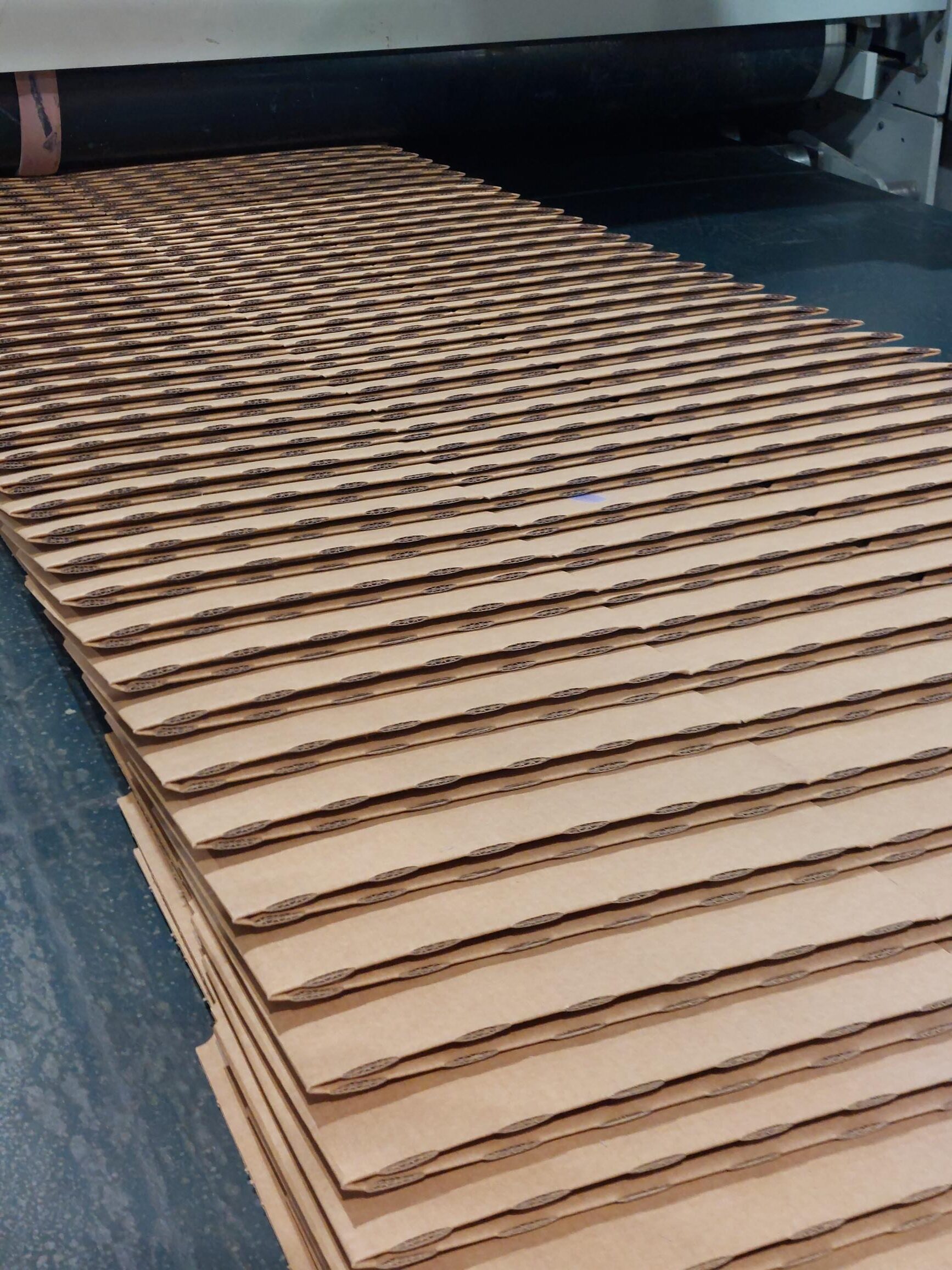
Understanding corrugated board grades is essential for anyone involved in packaging design, shipping, or product protection. Corrugated board may look simple from the outside, but its structure, strength, and performance vary widely depending on the grade. Choosing the right one can reduce costs, prevent damage, and improve sustainability. To understand corrugated grades properly, it helps to break them down into three key elements: the fluting, the liners, and the performance rating.
We explain a little about the basics and how we work with customers to ensure they get the right board grade for their packaging.
At its core, corrugated board is made from two components: flat sheets called liners and a wavy inner layer called flute. The flute is glued between the liners, creating a rigid, lightweight structure. The size and shape of the flute determine how well the board cushions impacts, resists compression, and handles stacking loads. Some of the most common flute profiles are B, C, E, M, MB, BC, EB with each offering different performance characteristics.
Most common types of board are referred to as single-wall and double-wall. Double wall is created using two single wall boards which can differ to some degree. A common double‑wall combination is BC‑flute, which merges the strength of B‑flute with the cushioning of C‑flute. This grade is widely used for heavier goods, industrial parts, and export packaging.
While flute profiles describe the structure, board grades are often defined by their liner materials. Liners can be made from kraft (virgin fibres), test (recycled fibres), or a mix of both. Kraft liners offer superior strength and moisture resistance, making them ideal for demanding supply chains. Test liners, being recycled, are more economical and environmentally friendly but slightly less robust. Many boards use a combination, such as kraft on the outside for strength and test on the inside for cost efficiency.
In the UK and Europe, corrugated board is commonly specified using a format like “200K/T B‑flute”. The number refers to the grammage (weight per square metre) of the liners, while the letters indicate the liner types (K for kraft, T for test). The flute letter then completes the description. This system helps buyers compare boards based on material composition rather than just performance claims.
However, performance ratings are equally important. Two widely used measures are ECT (Edge Crush Test) and BCT (Box Compression Test). ECT measures how much force the board can withstand when pressure is applied to its edge. A higher ECT value means better stacking strength. BCT, on the other hand, measures the maximum load a finished box can handle before collapsing. These ratings are crucial for logistics planning, especially when boxes are stacked on pallets or stored in warehouses.
Understanding corrugated grades also involves considering environmental and cost factors. Heavier boards are not always better; they may increase shipping costs and use more material than necessary.
This is where a bespoke corrugated packaging supplier, such as Red Rose Packaging, focuses on the right solution, board grade and design where the board grade is matched precisely to the product’s weight, fragility, and supply‑chain conditions. Advances in recycled materials and flute engineering mean that lighter grades can now perform as well as historic favourites.
Ultimately, choosing the right corrugated board grade is about balancing protection, cost, sustainability, and appearance. By understanding how flute profiles, liner materials, and performance ratings work together, businesses can make informed decisions that improve product safety and reduce waste. Whether you’re shipping delicate electronics, heavy machinery parts, or retail‑ready consumer goods, the right board grade ensures your packaging performs exactly as it should
Contact Us
If you’d like to discuss your packaging needs, contact the Sales Office on 0161 483 4433 or send a confidential enquiry below.
Please complete all fields for an email response, or just your name and telephone number if you’d like us to call you back.
Recent Comments